
Women Philosophers in Nineteenth-Century Britain
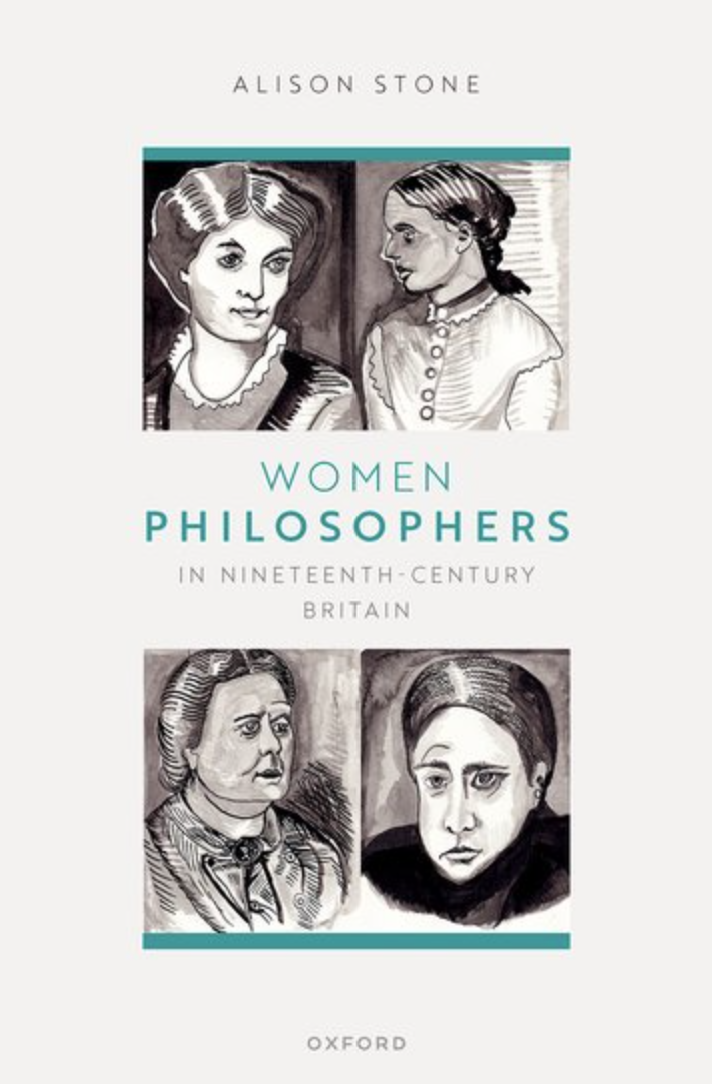
| Book: |
Women Philosophers in Nineteenth-Century Britain Alison Stone Oxford, Oxford University Press, ISBN: 9780192874, 304pp, Price: £88.00 |
|---|---|
| Reviewer: |
Dr Petros Spanou University of Oxford |
| Citation: |
Dr Petros Spanou, review of Women Philosophers in Nineteenth-Century Britain,
(review no. 2484)
https://reviews.history.ac.uk/review/2484/ Date accessed: 24 November 2026 |
Book:
Women Philosophers in Nineteenth-Century Britain
Alison Stone
Oxford, Oxford University Press, ISBN: 9780192874, 304pp, Price: £88.00
Reviewer:
Dr Petros Spanou
University of Oxford
Citation:
Dr Petros Spanou, review of Women Philosophers in Nineteenth-Century Britain,
(review no. 2484)
https://reviews.history.ac.uk/review/2484/
Date accessed: 24 November 2026


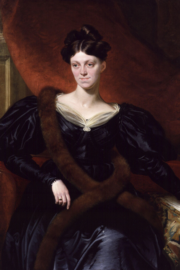
Death was imminent for Harriet Martineau in 1855 or, at least, this is what she thought. Convinced that a disease of the heart would soon lead her to the grave, she began setting her house in order by writing her Autobiography, not published until 1877, one year after she actually passed away. In common with J. S. Mill’s later avowed autobiographical aim to ‘not[e] the successive phases of [his] mind which was always pressing forward’, Martineau traced the contours of her own intellectual development and concomitant de-conversion from Unitarianism to her fervent secularist and materialist apostleship of Comtean positivism.[1] ‘Things were pressing to be said and there was more or less evidence that I was the person to say them’, declared Martineau to readers of the Autobiography, profoundly conscious of the power and impact of her intellect, and mindful of her cultural authority and self-professed didactic duties towards the wider public.[2] Martineau was an extremely prolific writer who published works on sociology, religion, philosophy, political economy, abolitionism, mesmerism, disability, and history, as well as fiction. She was a leader-writer for the Daily News, the metropolitan newspaper founded by Charles Dickens, and a contributor to the Westminster Review, the highbrow periodical of ‘Philosophical Radicals’ which George Eliot partly edited. Unlike Eliot, whose name is well-known both within and beyond academic circles, Martineau remains little remembered today, even though she was the most important woman of letters in nineteenth-century Britain. This is not an assessment historians have made with hindsight; this was the conclusion of many Victorians too, with Eliot extolling Martineau as ‘the only English woman that possesse[d] thoroughly the art of writing.’[3]
Martineau and Eliot are only two out of a total of twelve women protagonists in Alison Stone’s engrossing book which seeks to recover (and absolutely succeeds in doing so) their intellectual standing in, and contributions to, Western philosophy. The other women populating Stone’s philosophical constellation are Mary Shepherd, Ada Lovelace, Frances Power Cobbe, Helena Blavatsky, Julia Wedgwood, Victoria Welby, Arabella Buckley, Annie Besant, Vernon Lee, and Constance Naden. Identifying a problem in extant scholarship, namely the tangential attention historians of philosophy have paid to the nineteenth century and contemporary women philosophers in particular, Stone embarks on a systematic, sustained, and contextual project of reconstruction to demonstrate ‘the range, variety, and vitality of women’s philosophical thought in the period’ (p. 6). Historians are sometimes sceptical of the methodological approaches of their colleagues working in Philosophy departments, because of a prevalent assumption that they often indulge in theoretical abstractions lacking any sound or robust empirical basis. This is certainly not the case here: Stone’s methodology is historically informed, situating her cast of characters in the wider intellectual milieu of the period. Stone thus follows the approach which many intellectual and cultural historians of the nineteenth century have taken, having long recognised that contemporaries operated in a common discursive context fostered by the periodical press, especially the eminently sophisticated and critical essay-like reviews and review-like essays it engendered. Stone rightly recognises that these twelve women philosophers rubbed shoulders with men as well as other women within this context, and that ‘the conversations and filiations’ (p. 7) amongst them are equally as important as the development of their own thought in revealing these women’s philosophical writings and the range of debates they participated in, touching upon epistemology, the mind, evolution, science, aesthetics, history, politics, and, crucially, religion and morality. The book, comprised of six main chapters, is organised thematically precisely in order to allow for a proper illumination of these ‘filiations’. The final product is a compellingly written, impressively researched, and persuasively argued account which makes a significant contribution to philosophical studies and the history of philosophy of the nineteenth century.
Nineteenth-century women were not expected to participate in intellectual life. However, the expanding print market enabled them to transcend the barriers they faced, and claim their own space in contemporary intellectual culture. Stone begins her mission of recovery in Chapter 1 by explaining women’s involvement in the ‘generalist philosophical culture’ (p. 21), sustained by an expanding and vibrant periodical literature and the ‘common intellectual context’ (p. 25). Here, Stone also examines why these women became forgotten. Because they donned the mantles of the populariser, the educator, the translator, or the commentator, nineteenth-century women philosophers faced the dismissal of a condescending posterity which resolved that their works were ‘merely “secondary” and derivative’, and thus did not deserve to enter the canon of Western philosophy (p. 42). The fact that most of women’s philosophical contributions in periodicals were anonymous or pseudonymous, Stone also argues, reinforced the notion that only men wielded cultural and intellectual authority. Whilst broadly true, this argument can be overstated since not all of women’s philosophical works were published anonymously or pseudonymously, of course. At least in regard to women’s eponymously-published works outside the parameters of periodical literature, contemporary intellectuals and other pundits engaged with, and commented critically, on them, thereby drawing these women to the heart of debate. This was the case with Martineau’s Illustrations of Political Economy (1832-4), which Thomas Carlyle and Mill censured for carrying laissez-faire principles to their extreme. Her Letters on the Laws of Man’s Nature and Development (1851), which she co-authored with the phreno-mesmerist Henry George Atkinson, were also published eponymously, causing quite a stir in intellectual circles, and leading to a spectacular public falling-out between Harriet and her brother, the eminent Unitarian divine James Martineau. Besides, it should be added, many male public intellectuals also published most of their periodical articles anonymously or pseudonymously for much of the nineteenth century. A consideration of the methodological and interpretive problems posed by anonymity and pseudonymity can thus only take us so far in explaining why these women became forgotten. A more compelling argument which Stone posits is the professionalisation of philosophy during the 1870s. The common intellectual context began to fracture around this time, leading to the consolidation of disciplines and the rise of specialist journals and professional societies. The generalist periodical literature which allowed women to write philosophy was slowly, but by no means entirely or uniformly, replaced by more specialist journals. This, coupled with women’s exclusion from higher education for much of the nineteenth century, meant that the nascent and male-dominated profession of philosophers demarcated the boundaries of their discipline, distinguishing it from the generalist philosophy of the mid-Victorian generation in which women partook.
The focus of Chapter 2 falls on Shepherd, Martineau, Cobbe, and Welby who, as Stone notes, ‘stood on a central fault-line in nineteenth-century British thought: naturalism versus anti-naturalism’ (p. 56). These women contributed to and shaped philosophical debates about the epistemological authority, or lack thereof, of the scientific method predicated on empiricism and inductivism. In the 1820s, Shepherd put forward an anti-naturalist argument directed against Humean scepticism and its rejection of causation, which had seemingly paved the path for the destabilisation of belief in a first cause, God. Around the same time, Martineau advocated a predominantly naturalist position with some anti-naturalist elements. Although she espoused a posteriori knowledge and the empirical ethos of observation and experimentation, Martineau continued to sustain a belief ‘in God, immortal souls and the afterlife’, influenced by Priestly and his views on causality (pp. 67, 72). Martineau’s gradual loss of her religious faith following her revelatory travels in Egypt and the Near East, her ‘miraculous’ cure of her illness through mesmerism, the publication of the seemingly atheist and materialist Letters with Atkinson, and her translation in 1853 of August Comte’s Cours de Philosophie Positive, prepared her ‘conversion’ to full-blown naturalism. Yet Martineau was not without her critics. Cobbe, for example, disagreed with her naturalist outlook because of naturalism’s inability to ‘provide a sound basis for morality’ (p. 82). ‘Experimentalism’, according to Cobbe, could explain neither the universality nor the ‘necessary character of fundamental moral truths and requirements’. Cobbe was convinced that divinely-legislated moral laws go beyond the empirical and natural world. Intuition, linked to ‘a priori reason and God-given conscience’, was for Cobbe the faculty through which we can gain an understanding of moral truths and laws (pp. 82, 84). The philosophical regiment of anti-naturalists which Stone identifies was later joined by Welby, who critiqued not only Huxley’s scientific empiricism, but also the Comtean tripartite developmental model (theological stage, followed by the metaphysical stage, followed by the positive-scientific stage) which Martineau had done much to popularise and expound following her 1853 translation. Contrary to Comte and Martineau, Welby argued that the first stage of societal and intellectual development comprised both religion and metaphysics, with science being the second stage. The third stage combined dogmatic religion and experimentalism.
Chapter 3, ‘Philosophy of Mind’, pieces together the theories of Lovelace, Cobbe, Naden, Blavatsky, and Besant about the mind, formulated ‘in conversation with male interlocutors’ (p. 100), and ventilated in the generalist periodical literature which invited associated discussions on religion, metaphysics, ethics, and scientific discoveries relating to the brain and the nervous system. Lovelace grappled with the question of whether Charles Babbage’s analytical engine had the capacity to think. Cobbe’s religious sensibilities led her to examine the operations of mental phenomena and behaviours, and to conclude that the soul is the repository of consciousness and free will, thereby drawing a distinction between the soul and the brain which operates automatically and unconsciously. On the other hand, the immanentist Naden became the most important disciple and exponent of Robert Lewins’s ‘unorthodox and polemical brand of atheism and materialism, “hylo-zoism”’—later renamed ‘hylo-idealism’ (p. 118). As Stone clearly explains, ‘hylo-idealism’ rested on a materialist theory of the brain. Idealism stipulated that human beings can only know the ideas that they themselves make, with each living in their ‘own self-generated mental world’. What creates these ideas is the brain, according to ‘hyle-ism’—materialism, in other words. In Naden’s view, humans held the ultimate creative agency and power. These had been relinquished and transferred to an imaginary divine being, but now was the right time for humans to gain them back. Naden’s hylo-idealism perturbed some contemporaries, including the theosophist Blavatsky, who challenged this philosophical position and described it as the “bitterest enemy” of theosophy (p. 125). Doubting materialist frameworks for explaining life and mind, Besant subscribed to Blavatsky’s theosophist position.
The responses of Wedgwood, Cobbe, and Buckley to the metaphysical, religious, and ethical implications of Darwinian evolutionary theory, and the intense philosophical debates between these women, are at the heart of Chapter 4. Evolutionary theory, according to Wedgwood, could be reconciled with religion and morality. In her ‘Boundaries of Science’ article, carried by Macmillan’s Magazine not long after the publication of Darwin’s On the Origin of Species, Wedgwood employed the narrative form of a Socratic dialogue between two fictional characters debating the compatibility of Darwinism with Christianity. The evolutionary process, believed Wedgwood, allowed the species to achieve perfection through struggle; this opened up the way for the ‘production of human beings as spiritual and moral agents’ (p. 138). Wedgwood’s intervention drew the admiration of Darwin, who thought that no one had understood his theory as well as her. Initially Cobbe found no grounds of objection, thinking that evolution by natural selection was a divinely-initiated process. However, she later took issue with Darwin’s Descent of Man (1871), because of Darwin’s apparent ‘elimination of a religious basis for morality’ (p. 148). Did Darwinism allow room for ‘a morality of sympathy and social cooperation’, pondered Cobbe, or did it merely support ‘the survival of the fittest’ (p. 159)? Cobbe’s views were not left uncontested. One of her most vocal critics, as Stone demonstrates, was Buckley, a populariser of Darwin’s work. Although Darwin eventually became an agnostic, Buckley continued obstinately to propound the compatibility of evolutionary theory with Christianity.
Though not as original as the book’s other chapters, Chapter 5 is nevertheless exquisitely written: clear, well-structured, and eminently analytical. It explores the philosophical ideas of Martineau, Eliot, Cobbe, Lee, and Besant in relation to religion and morality. In common with scholars such as Laura Schwarz, Stone rightly recognises that Christian ideas and themes lingered in the thought even of women who eventually abandoned their religious faith and espoused ‘secular forms of belief’ (p. 164).[4] After offering a decent precis of Martineau’s loss of faith, Stone focuses on Eliot. Stone here effectively and fruitfully employs a comparative approach, surveying Eliot’s ideas alongside Martineau’s, acknowledging that the two women had ‘parallel intellectual trajectories’ (p. 172). Both women of letters abandoned their faith in the 1840s: Eliot, her evangelical upbringing; Martineau, her Unitarianism. Both also leaned towards positivism, Martineau more emphatically and completely than Eliot. Finally, both became convinced that the basis of morality should be non-religious, and that correct moral action rests on unselfishness or altruism—the term which Eliot’s partner, G. H. Lewes, coined in his exposition of Comtean positivism. However, there was a key difference between the two women: whilst Martineau believed that the achievement of unselfishness was possible only after we transcend our emotions and gain an understanding of rationalist principles and universal laws, Eliot held that altruism ought to be motivated by emotions. The solution Eliot proposed is found in fiction. Imaginative literature, injected with a substantial dose of realism, should supplant religion as the basis of morality because morality relies on sympathy, sympathy is cultivated through imagination, and literature’s role is to nurture our ‘imaginative sympathy’ with other people (p. 178). Eliot, Martineau, and other positivists such as Frederick Harrison were challenged by Cobbe in 1877. Pace the secular moralism they posited, Cobbe averred that a divinely-legislated absolute moral law is what guides our moral actions and obligations. A less compelling interlude centring on Lee’s response is followed by a fascinating examination of the Besant-Cobbe debate about the true foundations of morality. Pointing to what she believed was the spuriousness of Cobbe’s intuitionism, Besant argued that utilitarianism offered a superior, scientific, and sounder basis of morality than religion, given the uncertainty and debate surrounding God’s existence.
The book’s sixth and final chapter offers an excellent comparative examination of the ideas about progress in history of Martineau, Cobbe, Wedgwood, and Blavatsky. Following her travels in Egypt and the near East during the 1840s which made the scales fall from her eyes and persuade her to abandon Christianity, Martineau expounded in her Eastern Life, Present and Past (1848) a model of the historical progression of religion from ancient Egyptian beliefs, to Judaism, and finally to Christianity, which she expected to be supplanted by secularism. Cobbe read Martineau’s Eastern Life, inspiring her to travel to the East and write her own travelogue, which she published in 1864. In common with Martineau, Cobbe followed ‘an idealist view of history’ (p. 207). Yet Cobbe produced an alternative progressive model of belief: she ordered world religions according to an account which began with animism, the earliest religious stage in which natural phenomena had been invested with invisible powers; followed by polytheism; followed by the ‘partial holiness’ of Judaism and Hinduism; and finally, culminating in Christianity, the religion of ‘full holiness’. Operating on a third, middle way between Martineau and Cobbe, Wedgwood argued that the final stage in the progression of world belief-systems is neither secularism (Martineau) nor Christianity (Cobbe), but a fusion of the two. The theosophist Blavatsky, who drew on the knowledge and experiences of her extensive travels, stood firmly on the esoteric tradition and advised ‘a return to ancient wisdom’ (p. 217). Blavatsky thus embarked on a ‘rescue mission’—salvaging “from degradation the archaic truths which are the basis of all religions; and [uncovering] the fundamental unity from which they all spring”.
The uninitiated reader might, understandably, struggle with many of these complex philosophical topics and debates which took place in the peculiar and ‘alien’—from a twenty-first-century perspective—intellectual landscape of the nineteenth century, but Stone does an excellent job of explaining them in a lucid and coherent manner. The book is also clearly signposted throughout, providing the argument at the start of each chapter and useful summaries at the end. Readers will certainly appreciate these efforts because they make the themes which Stone examines more digestible. Having said that, in most cases the book’s footnotes do not provide citations to sources, but are overburdened with further analysis and exposition. Stone’s in-text citation practice is, of course, perfectly legitimate in building the book’s scholarly apparatus. There is also nothing inherently wrong with the book’s heavily explicatory footnotes, which draw the reader into finer details and nuances. But this often breaks the flow of the narrative, rather than helping it. Nonetheless, this does not in any way diminish the achievement of Stone’s important book: a superb, absorbing, and thought-provoking work offering a major reassessment of nineteenth-century philosophy, and giving voice to a mostly voiceless group of brilliant women of towering intellects who deserve our recognition, historical appreciation, and admiration.
[1] J.S. Mill, Autobiography (London, 1873), pp. 1-2.
[2] Harriet Martineau, Autobiography, ed. Linda H. Peterson (Peterborough, Ontario, 2007), p. 155.
[3] George Eliot to Mr and Mrs Charles Bray and Sara Sophia Hennell [London, 2 June 1852], in George Eliot, The George Eliot Letters: Vol. II, ed. G.S. Haight (New Haven, CT, 1954), p. 32.
[4] Laura Schwartz, Infidel Feminism: Secularism, Religion and Women’s Emancipation, England 1830-1914 (Manchester, 2013).
October 2024